Can Hospital Beds Help Reduce the Risk of Pressure Ulcers? A Guide to Choosing the Right Bed and Providing Proper Patient Care
Last updated: 16 Nov 2026 | 19 Views |

Can Hospital Beds Help Reduce the Risk of Pressure Ulcers? A Guide to Choosing the Right Bed and Providing Proper Patient Care
Caring for elderly individuals or patients who spend extended periods in bed requires special attention to comfort, safety, and skin health. One of the most common concerns for caregivers is the development of pressure ulcers (pressure injuries), which can occur when prolonged pressure damages the skin and underlying tissues.
This raises an important question: Can an electric hospital bed really help reduce the risk of pressure ulcers?
The answer is yes. An adjustable hospital bed can support pressure injury prevention by making patient positioning and repositioning easier. However, a hospital bed alone cannot completely prevent pressure ulcers.
Effective prevention also requires regular repositioning, appropriate pressure-redistributing mattresses, proper skin care, and individualized patient care.
In this article, AdlerDrive explains how hospital beds can support pressure injury prevention, what features to consider when choosing a bed, and how caregivers can provide safer and more comfortable care at home.
1. What Are Pressure Ulcers, and Why Are Bedridden Patients at Risk?
A pressure ulcer, also known as a pressure injury or bedsore, is damage to the skin and underlying tissue caused by prolonged pressure or pressure combined with shear forces.
When pressure restricts blood circulation to an area of the body, the affected tissues may become damaged. Without appropriate care, this can progress into a more serious wound.
Pressure injuries commonly develop over bony areas, including:
- Tailbone and sacrum
- Hips
- Heels
- Elbows
- Back and shoulder blades
Who Is at Higher Risk of Developing Pressure Ulcers?
Individuals with a higher risk include:
Key Benefits:
- Elderly people with limited mobility
- Bedridden patients who spend long periods lying down
- Patients recovering from surgery or serious illness
- Individuals with paralysis or neurological conditions
- Patients who cannot reposition themselves independently
- Individuals with poor nutritional status
- Patients with reduced skin sensation or excessive skin moisture
Important: Persistent skin redness or discoloration, blisters, or open wounds may indicate a pressure injury. If these signs appear, consult a healthcare professional for proper assessment.
2. How Can Electric Hospital Beds Help Reduce the Risk of Pressure Ulcers?
An electric hospital bed is designed with adjustable functions that allow caregivers to position patients more conveniently.
These functions can support patient comfort, daily care, and safe repositioning, which are important components of pressure injury prevention.
2.1 Adjustable Backrest Function
An adjustable backrest allows patients to move from a flat lying position to a semi-upright position.
This can be helpful for:
- Eating meals
- Reading or watching television
- Performing certain daily activities
- Receiving care while in bed
- Improving comfort when a semi-upright position is medically appropriate
However, keeping the head of the bed elevated for long periods may increase pressure on the sacrum and cause the patient to slide downward, creating shear forces.
Caregivers should therefore adjust the backrest according to the patient's needs and medical recommendations.
2.2 Adjustable Leg and Knee Positioning
Some hospital beds allow caregivers to adjust the leg or knee sections.
This feature may help support the patient's posture and improve comfort during extended periods of bed rest.
However, raising the legs alone does not guarantee pressure relief at the heels.
For patients at risk of heel pressure injuries, appropriate heel-offloading devices or positioning techniques may be necessary to keep pressure off the heels.
2.3 Height Adjustment Function
Hospital beds with adjustable height settings can make daily caregiving tasks easier and safer.
These functions help caregivers:
- Assist patients with repositioning
- Perform personal hygiene routines
- Change bedding
- Support patient transfers
- Adjust the working height to reduce physical strain
- Provide more convenient bedside care
By making repositioning and caregiving activities easier, height-adjustable hospital beds can support a more effective pressure injury prevention routine.
3. Electric Hospital Beds vs. Regular Beds: What's the Difference?
Although both types of beds provide a surface for resting, electric hospital beds offer additional positioning functions that may be beneficial for patients requiring long-term care.
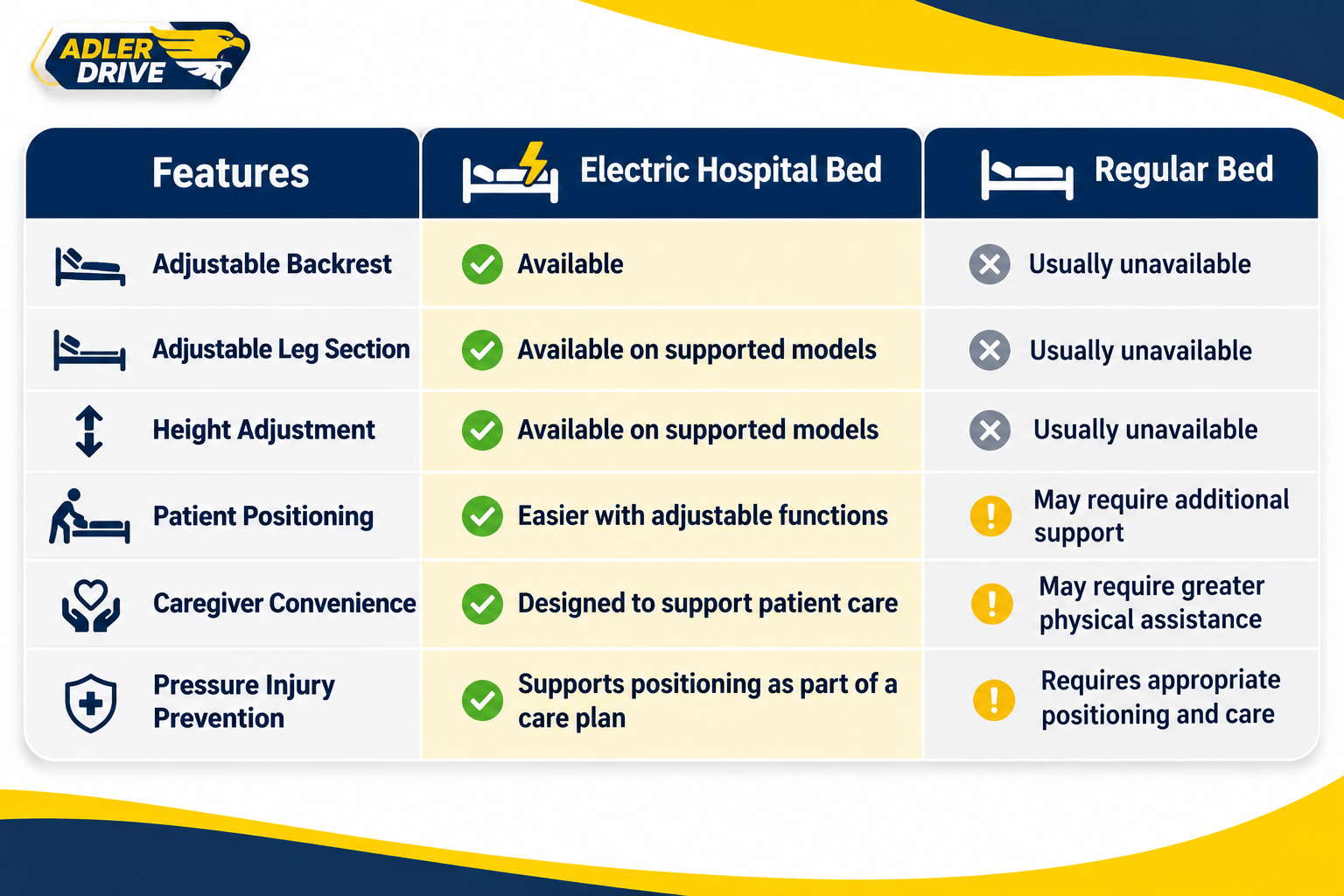
Important: An electric hospital bed does not replace a pressure-redistributing mattress or eliminate the need for regular patient repositioning.
4. Essential Ways to Prevent Pressure Ulcers in Bedridden Patients
Preventing pressure injuries requires a combination of proper equipment, regular monitoring, and individualized care.
4.1 Reposition the Patient Regularly
Patients who cannot move independently should be repositioned according to an individualized care plan.
Some patients may require repositioning approximately every 2–4 hours, but the appropriate frequency depends on their mobility, skin condition, pressure injury risk, and support surface.
Caregivers should consult healthcare professionals to determine a suitable repositioning schedule.
4.2 Use a Pressure-Redistributing Mattress
A pressure-redistributing mattress can help distribute body weight more evenly and reduce concentrated pressure on vulnerable areas.
Common options include:
- High-specification foam mattresses
- Alternating-pressure air mattresses
- Other specialized pressure-redistributing support surfaces
The most suitable mattress depends on the patient's weight, mobility, clinical condition, and pressure injury risk.
A specialized mattress should complement, rather than replace, regular repositioning.
4.3 Maintain Proper Skin Care
Regular skin inspection is essential for identifying early signs of pressure injuries.
Caregivers should pay particular attention to areas such as the sacrum, hips, heels, and elbows.
Recommended practices include:
- Keeping the skin clean
- Managing moisture from perspiration or incontinence
- Using appropriate skin protection products
- Checking for persistent redness or discoloration
- Avoiding excessive friction during personal care
Do not massage or vigorously rub areas showing signs of pressure damage.
4.4 Support Proper Nutrition and Hydration
Adequate nutrition and hydration play important roles in maintaining healthy skin and supporting tissue recovery.
Patients with poor appetite, weight loss, or nutritional deficiencies may require assessment by a healthcare professional or registered dietitian.
4.5 Reduce Friction and Shear Forces
Friction and shear can contribute to skin damage, particularly when patients slide down the bed or are dragged across the mattress.
Caregivers should use appropriate repositioning techniques and transfer aids when necessary.
Maintaining suitable bed positioning can also help minimize unnecessary sliding and pressure on vulnerable areas.
5. How to Choose the Right Hospital Bed for Patients at Risk of Pressure Ulcers
Choosing a hospital bed requires careful consideration of the patient's medical condition, mobility level, and daily care needs.
Here are six important features to look for.
1. Adjustable Backrest and Leg Sections
These functions allow caregivers to adjust the patient's position for comfort, daily activities, and appropriate care.
2. Height Adjustment
A height-adjustable bed can make repositioning, personal hygiene, and patient transfers more convenient for caregivers.
3. Compatibility with Pressure-Redistributing Mattresses
Choose a bed that can accommodate an appropriate mattress based on its dimensions, thickness, and manufacturer specifications.
4. Suitable Side Rails
Side rails may help support safety in certain situations, but they should be selected and used carefully.
Improperly fitted side rails or mattresses can create entrapment hazards. The patient's individual needs and safety risks should always be assessed.
5. Strong and Stable Construction
The bed should have a durable frame and a safe working load appropriate for the patient and any required accessories.
6. Easy-to-Use Controls
Electric controls should be convenient for caregivers to operate, allowing smooth adjustments during daily care.
AdlerDrive Tip: For patients requiring long-term bed rest, consider the hospital bed, mattress, repositioning needs, and caregiving environment together rather than selecting a bed based on its number of functions alone.
6. Frequently Asked Questions (FAQ)
Q1: Can an electric hospital bed completely prevent pressure ulcers?
Answer: No. An electric hospital bed can support pressure injury prevention by making patient positioning easier, but it cannot completely prevent pressure ulcers. Regular repositioning, appropriate support surfaces, skin care, and medical assessment remain essential.
Q2: Does every bedridden patient need an alternating-pressure air mattress?
Answer: Not necessarily. Mattress selection should depend on the patient's pressure injury risk, mobility, skin condition, and healthcare professional's recommendations.
Q3: Does keeping the head of the bed elevated help prevent pressure ulcers?
Answer: Not always. Prolonged elevation may increase pressure and shear forces around the sacrum, particularly if the patient slides downward. The bed angle should be adjusted according to clinical needs.
Q4: How often should bedridden patients be repositioned?
Answer: Repositioning frequency varies depending on the patient's condition and support surface. Some patients may need repositioning every 2–4 hours, while others require a different schedule based on professional assessment.
Q5: What should caregivers do if a patient develops persistent redness on the skin?
Answer: Reduce pressure on the affected area, avoid rubbing or massaging it, and seek assessment from a healthcare professional, especially if discoloration persists, blisters develop, or the skin becomes broken.
Conclusion: Can Hospital Beds Really Help Reduce the Risk of Pressure Ulcers?
Yes, adjustable hospital beds can play a supportive role in reducing the risk of pressure ulcers.
By making repositioning and daily caregiving activities more convenient, electric hospital beds can help caregivers provide better support for patients with limited mobility.
However, effective pressure injury prevention requires more than an adjustable bed.
Regular repositioning, appropriate pressure-redistributing mattresses, skin monitoring, adequate nutrition, and individualized care are equally important.
For families caring for elderly or bedridden patients at home, choosing the right hospital bed can contribute to a safer, more comfortable, and more manageable caregiving environment.
Find the Right Hospital Bed at AdlerDrive
At AdlerDrive, we offer a selection of electric hospital beds, elderly care beds, and home healthcare equipment designed to support patient comfort and everyday caregiving needs.
Our team can provide product information and help you compare suitable hospital bed options based on your requirements.
Contact AdlerDrive
Tel: 094-308-4455
LINE Official Account: @adlerdrive
Website: www.adlerdrive.com
AdlerDrive – Supporting Better Mobility, Comfort, and Everyday Living.
Medical Disclaimer: This article is intended for general educational purposes only and does not replace professional medical advice, diagnosis, or treatment. Pressure injury prevention should be based on individualized assessment and guidance from qualified healthcare professionals.
See more products at : >> Hospital Bed << Click!


Related content


What Is an Electric Lift Chair?
30 Jun 2026
